Good evening, gentlemen.
I present to you a colonial Okapi knife. I know little about these. I know that they were inexpensive knives from Solingen intended for colonial countries. Something like the French Douk-Douk. Beads or mirrors for the local population.
The blade is made of carbon steel, the scales are made of a material similar to Bakelite. the blade length is exactly 10 cm. An unusual ratchet lock. To close the blade, you need to pull the ring. In France, such knives are called "Palm”. Judging by the inscription "Made in Germany," I can assume the knife was made before WW2. Since after the war, they wrote West Germany or East Germany. Since 1988, these knives have been produced in South Africa. I await your feedback. Enjoy


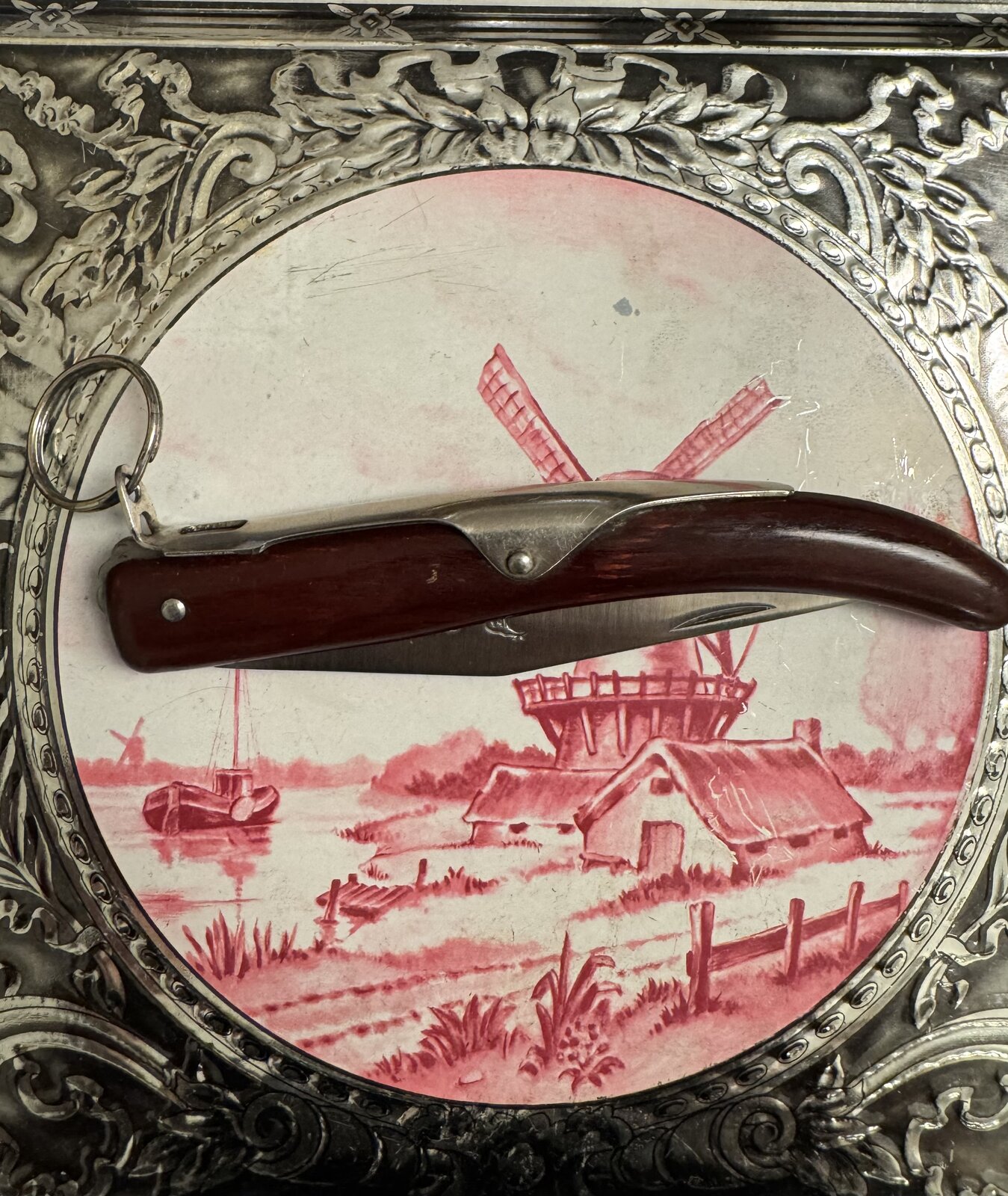

I present to you a colonial Okapi knife. I know little about these. I know that they were inexpensive knives from Solingen intended for colonial countries. Something like the French Douk-Douk. Beads or mirrors for the local population.
The blade is made of carbon steel, the scales are made of a material similar to Bakelite. the blade length is exactly 10 cm. An unusual ratchet lock. To close the blade, you need to pull the ring. In France, such knives are called "Palm”. Judging by the inscription "Made in Germany," I can assume the knife was made before WW2. Since after the war, they wrote West Germany or East Germany. Since 1988, these knives have been produced in South Africa. I await your feedback. Enjoy